
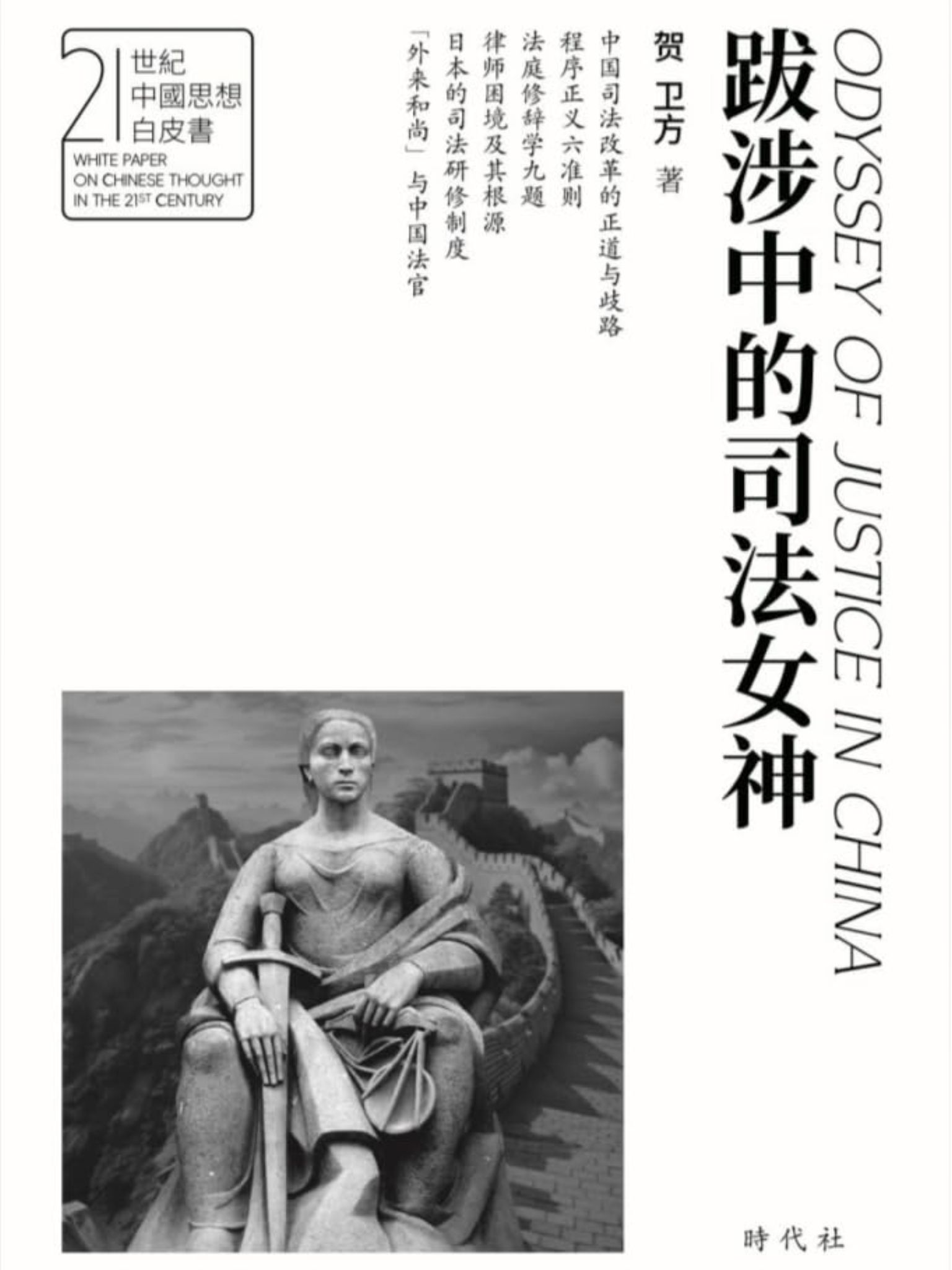
Odyssey of Justice in China
By He Weifang
About This Book
Japan's jidaisha Publishing House is publishing the "21st Century Chinese Thought White Paper" series, and I am honored to be one of the authors in this series. While feeling apprehensive, I am also quite puzzled about which texts to select for a collection that would fit the theme of the series. After much consideration, I decided to focus on China's judicial reform.
Looking back on my more than forty years of research, teaching, and writing career, comparative judicial systems and China's judicial reform are indeed the areas where I have devoted the most effort. Reviewing relevant writings from the past, including papers, speeches, interviews, and notes, my earliest published article was a historical review of the British jury system written during my second year of graduate study, published in Shanghai's "Social Sciences" No. 4, 1984. The earliest paper included in this book was published in 1990: "The Style and Spirit of Ancient Chinese Judicial Decisions—Based on the Song Dynasty with Comparisons to England." This paper essentially set the tone for subsequent thinking and writing, and readers can see that later texts mostly revolve around the themes addressed in that article.
As I increasingly engaged in participatory observation, I gradually enriched and deepened my understanding of the direction of judicial reform, including judicial independence and its environmental construction (such as the conception of judicial districts), the selection of judicial personnel, the establishment of due process, the professionalism of judicial management and decision-making, and the construction of a legal professional community. All of these point to one theme: how China's judiciary can move toward true professionalization.
However, those who understand China's judicial reform process know that the road toward independence, fairness, and professionalization is fraught with difficulties. In fact, by the early 2010s, judicial reform had already begun to stagnate. As a participant, I initially harbored a belief or bold hypothesis that when reforms in more sensitive areas of the political system were difficult to advance, dedicated professional judicial reform could become a breakthrough for overall transformation. I even thought that when judicial power achieved considerable fairness and high credibility through reform, it could become a key mechanism for leading and ensuring reforms in areas such as political parties, media, parliament, and land, ultimately achieving comprehensive transformation from ideology to specific institutions. Later practice proved that this assumption was too wishful.
At a direct level, judicial reform must interact and promote with other aspects of the political system. At a deeper level, it is more of a civilizational transformation, involving diverse and complex matters such as ideological forms, governance traditions, social institutions, and economic systems. It is difficult to transform these into a comprehensive driving force sufficient to promote judicial transformation in a short time. The fate of the goddess of justice in China is destined not to be smooth sailing.
Under this realization, in the past decade or so, I have devoted more effort to the genealogical study of constitutional systems, including judicial independence. For example, inspired by Naito Konan's classic hypothesis of the "Tang-Song Transformation," through reading the evolution of China's traditional governance models and related histories of Western Europe and Japan, I have gradually understood some truths revealed in Naito's theory, such as his identification of certain characteristics that made the Song Dynasty the earliest early modern state, including the establishment of monarchical autocracy, the demise of aristocratic classes and aristocratic politics, and the fluidity, dependency, and literati character (also meaning anti-professionalization) of the bureaucratic class brought by the imperial examination system. Of course, since such recent works are no longer within the narrow scope of judicial research, related articles have not been included in this book. Interested readers can refer to my essay "Longevity of the Dynasty and Limits of Monarchical Power: A Comparative Study of Classical Constitutionalism and Rule of Law," published in Constructing Legal Institutions: A Festschrift for Professor Jerome Cohen's 90th Birthday, edited by Yu Ping, Taiwan Yuan Zhao Publishing, June 2020, pp. 125-143. I gave a lecture on this topic at Waseda University, and the relevant content can be found in Waseda Asian Review, Issue 21 (March 2019, pp. 36-55). Additionally, Dr. Li Cheng, currently teaching at the University of Hong Kong, has provided observations and reflections on my participation in judicial reform in the chapter titled "He Weifang (Legal Scholar)" in Cheng Li, The Power of Ideas: The Rising Influence of Thinkers and Think Tanks in China, World Scientific Publishing Company, 2017.
Some of the articles included in this book have been published before; during this editing process, I made more or less revisions to each article. Rereading these texts spanning more than twenty years, I feel there is no need to change my viewpoints. I cannot be confident about my achievements, but I have been able to maintain scholarly independence and refuse to distort learning to please the world, which is somewhat comforting. In addition to the journalists and editors who left their names in the interview articles, I would also like to express sincere gratitude to the teachers, friends, and colleagues who have given me instruction and encouragement over the years (not listed here individually).
He Weifang, Beijing, March 2025
Table of Contents
- Preface
- Introduction The Right and Wrong Paths of China's Judicial Reform
- Chapter 1 Style and Spirit of Classical Chinese Judicial Decisions
- Chapter 2 The Development of Judicial Independence in Modern China
- Chapter 3 Japan's Judicial Training System
- Chapter 4 "Foreign Monks" and Chinese Judges
- Chapter 5 Professionalization of Judicial Management
- Appendix 1) Concept of Judicial Districts; 2) Debate with Su Li on Judicial Committees
- Chapter 6 Six Principles of Procedural Justice
- Chapter 7 Introduction and Adaptation of the Adversarial System
- Chapter 8 The Plight of Lawyers and Its Roots
- Appendix Lawyer Autonomy and Social Recognition
- Chapter 9 The Attire of Justice
- Chapter 10 Nine Topics on Courtroom Rhetoric
- Chapter 11 The Professionalization Trend in Legal Education
- Conclusion Following Only the Proven Path
- Appendix Bibliography of He Weifang's Judicial Writings
About the Author
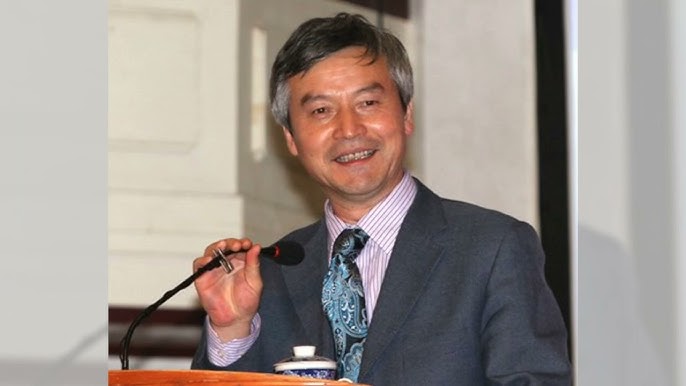
He Weifang (born 1960) is from Mouping, Yantai, Shandong Province. He received his LL.B. from Southwest University of Political Science and Law (1982) and LL.M. from China University of Political Science and Law (1985). He served as Professor of Law at Peking University until his retirement in July 2023. He is Vice President of the National Society of Foreign Legal History and holds honorary or adjunct professorships at numerous Chinese universities.
His research and teaching areas include jurisprudence, legal history, and comparative law. He was selected as one of "100 Young People Who May Influence 21st Century China" by China Youth magazine (2000), one of the top 50 prominent public intellectuals by Southern People Weekly (2005), one of Foreign Policy's Top 100 Global Thinkers (2011), and one of Handelsblatt's 25 Global Thinkers (2014).
Major Publications:
- Marginal Notes on Law (Law Press, 2015, 3rd edition)
- The Concept and System of Justice (China University of Political Science and Law Press, 1998)
- Concrete Rule of Law (Law Press, 2002)
- The Way to Deliver Justice (Shanghai Joint Publishing, 2003)
- We Legal Professionals (City University of Hong Kong Press, 2019)
See appendix "Bibliography of He Weifang's Judicial Writings" for complete list
Endorsement
"China stands at a crossroads. Will the Chinese Communist Party continue to remain essentially above the law, or will China embrace the rule of law by guaranteeing citizens' property rights and basic human rights? No scholar articulates this dilemma more clearly and passionately than He Weifang. Anyone seeking to understand today's China cannot ignore his work."—Niall Ferguson
Laurence A. Tisch Professor of History, Harvard University