

Constitutionalism and China's Economy
by Yang Xiaokai
About This Book
This collection was personally compiled by Professor Yang Xiaokai during his lifetime, with the "constitutional" theme also determined by Yang himself. It includes all his important articles on this subject, reflecting Yang's profound thinking on the relationship between "constitution" and economic development. The book was originally intended to be published by a "famous university" press in China, but for well-known reasons, this wish was not fulfilled during his lifetime. This publication has now been authorized by Yang Xiaokai's family.
Recent changes in China's social situation have proven many of the author's prescient judgments: without constitutional support, genuine economic reform is impossible; without ideological reform, there can be no real political reform; without social equity, there can be no genuine market economy; economic development dominated by "government opportunism" brings only greater income inequality; without land system reform—land privatization—it is impossible to liberate China's hundreds of millions of farmers and develop rural areas; industrialization based solely on technological imitation without institutional liberalization can only lead to "late-mover disadvantage"; industrialization under political monopoly is a breeding ground for "bad capitalism"... A society that denies constitutionalism will not have genuine economic development.
Table of Contents
- Preface Zhang Weiying
- Part I Late-Mover Disadvantage and Constitutional Transition
- Economic Reform and Constitutional Transition
- Christianity and Constitution
- Late-Mover Disadvantage, Republic and Freedom
- Good Capitalism and Bad Capitalism
- Part II China's Constitutional Transition: History and Prospects
- Development of Chinese Constitutionalism
- Kosovo Incident and Prospects for Democracy and Constitutionalism in China
- Benefits and Drawbacks of Chinese Unification
- Revolution and Counter-revolution, Democracy and Republic, Science and Freedom
- Freedom and China's Political Reform
- China's Constitutional Reform
- How to Make the Constitution Respected
- Part III Economic Freedom and Constitutional Transition
- Reading Notes on a Century of Chinese Economic History
- Why Land Ownership Reform is the Urgent Priority for China's Economic Reform
- Relationship between Private Land Ownership and Constitutional Republic
- Impact of China's WTO Accession
- Freedom and Economics
- China's Economic System Reform
- Free Enterprise and China's Economic Development
- Income Distribution Inequality in Mainland China
- Impact of China's Corporate Law Implementation
- Part IV Economics and Constitutional Construction
- Bounded Rationality
- My Understanding of Hayek's Thought
- New Political Economy and Transaction Cost Economics
- Property Rights Economics and Transaction Cost Theory
- New Economic Theory of "Organizational Innovation"
- References
About the Author
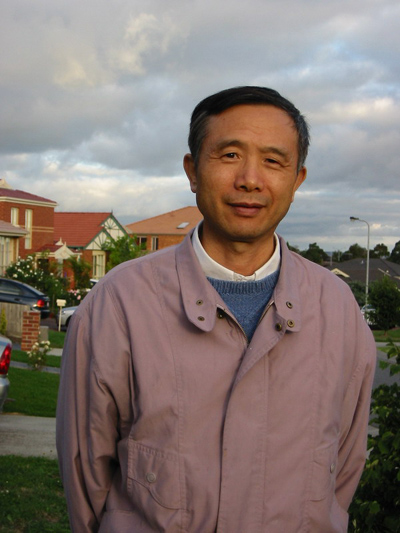
Yang Xiaokai (1948-2004), formerly known as Yang Xiguang, was a Princeton University PhD and renowned economist. He served as Chair Professor at Monash University, Australia, Fellow of the Academy of Social Sciences in Australia, and Director of the Center for the Study of Increasing Returns and Economic Organization.
His proposed and researched New Classical Economics and Inframarginal Analysis were called "the most important economic research achievements today" by Nobel Prize winner James Buchanan. Due to his tremendous achievements in economics, he was hailed as "the Chinese scholar closest to the Nobel Prize in Economics."
During the Cultural Revolution, Yang Xiaokai was a student at Changsha No. 1 Middle School in Hunan. He was imprisoned for ten years due to his big-character poster "Whither China?" While studying in the United States, he wrote about his prison experience in "Record of Monsters and Demons," published numerous papers in prestigious international economics journals, and authored the 9-volume "Yang Xiaokai Academic Library" and many economic essays. He passed away in Melbourne on July 7, 2004.
Endorsement
"I witnessed Yang Xiaokai's transformation from a mathematical economist to a constitutional thinker. In my view, Xiaokai's thoughts on constitutionalism represent the pinnacle of his lifelong academic thinking, closely related to his lifelong 'China complex.' He wanted to find a viable path to modernization for the motherland that nurtured him. Unfortunately, due to his early death and changes in China's public opinion environment, most of his papers on constitutionalism could not be published openly. But great thoughts never lose their luster with the passage of time. Today's world has become more uncertain, and today's China still doesn't know where it's heading. The publication of Yang Xiaokai's 'Constitution and Economics' collection comes at the right time. His academic thought remains fresh and vibrant!"—Zhang Weiying
Professor of Economics, National School of Development, Peking University